 >
>
 >
>
 >
>
 >
>
 >
>
 >
>
 >
>
 >
>
 >
>
 >
>
 >
>
How Much Could Your Family Save by Preserving Food?

Grocery bills are climbing. Package sizes are quietly shrinking. And for families trying to plan ahead, the unpredictability of today’s food market can make even a routine shopping trip feel like a financial obstacle course.
At All American 1930, we’ve spent nearly a century building tools that help families do something about it. Our pressure canners have been made right here in Manitowoc, Wisconsin since 1930—passed down through generations, trusted by serious home canners across the country. And the families who use them consistently tell us the same thing: preserving your own food doesn’t just fill your pantry. It changes what you spend at the grocery store.
Here’s a closer look at exactly how much those savings can add up.
What the Numbers Actually Look Like
The biggest savings in home food preservation come down to one principle: buy at the season’s lowest price, preserve it, and eat it year-round. When produce hits its peak—and its rock-bottom cost—that’s the moment to stock up. A bushel of tomatoes in August. Three flats of strawberries in June. Fifty pounds of green beans when the local harvest comes in. Those seasonal windows are where the real financial advantage lives.
To make it concrete, here’s a real-world breakdown from a single tomato run:
-
Bulk tomatoes from a local farmer’s market at peak season: $0.35/lb
-
Total purchased: 120 lbs — out-of-pocket cost: $42
-
Yield: 80 quarts of pasta sauce, salsa, pizza sauce, and diced tomatoes
-
Retail value of the equivalent store-bought products: ~$400
-
Net savings from that one session: over $350
When you factor in everything else a well-stocked pantry holds—soups, stews, broths, jams, meats, beans, pie fillings—those numbers multiply fast. Families who preserve seriously report saving thousands of dollars every year. That’s not an exaggeration. It’s what happens when you stop paying retail for food you could have put up yourself.
Packaged Food: Store Soup vs. Home-Canned Soup: The Real Cost
Few pantry staples show the cost gap more clearly than soup. At the grocery store, a single can of name-brand soup runs $1.50–$2.50 per serving—and that’s before you factor in the sodium levels, the ingredient list, or the fact that the can itself is barely two servings. Home-canned soup, pressure canned in an All American 1930 pressure canner to USDA-recommended standards, typically costs $0.30–$0.60 per serving. Same five-minute weeknight convenience. Entirely different story on price, ingredients, and nutrition.
|
Store-Bought Can |
Home-Canned Quart (~2.5 servings) |
The Difference |
|
|
Price per serving |
$1.50–$2.50 |
$0.30–$0.60 |
Save 70–80% |
|
Sodium per serving |
800–900mg |
~200mg (you control it) |
Healthier by far |
|
Ingredients |
Long list w/ preservatives |
Exactly what you put in |
No guesswork |
|
Weeknight prep time |
5 minutes |
5 minutes |
Same convenience |
|
Cost for 12 servings |
$18–$30 |
$3.60–$7.20 |
Save $11–$23 |
|
Annual cost (1x/week) |
~$936–$1,560 |
~$187–$374 |
Save $750–$1,186/yr |
Whether it's soup on a cold evening, chili for game day, or homemade broth for recipes throughout the year, having shelf-stable meals ready to go can add up to significant savings over time. Our pressure canners are built for this kind of batch cooking. Process a full canner load in one afternoon, and you'll have homemade meals ready to pull from the pantry whenever you need them. Even replacing just some of the canned soup you buy at the grocery store with your own home-canned versions can save hundreds of dollars each year while giving you complete control over the ingredients.
Store-Bought Canned Green Beans vs. Preserving Your Harvest
Green beans are a great starting point for anyone new to pressure canning—and an eye-opening comparison for anyone who’s been buying canned vegetables at the store. Because green beans are a low-acid food, pressure canning is the only safe preservation method, which is precisely what All American 1930 pressure canners are designed to do.
The math is hard to argue with. Home-preserved green beans from a garden or a bulk farm purchase cost around $0.30–$0.50 per quart when you account for the produce and lids. That same quart at the grocery store runs $2.50–$3.50—and often comes with added sodium, a softer texture, and the possibility of BPA in the lining. The jars you fill at home don’t have any of those drawbacks.
|
Store Canned |
Home-Canned Harvest |
Your Advantage |
|
|
Cost per quart |
$2.50–$3.50 |
$0.30–$0.50 |
Save ~$2–$3/qt |
|
50 lbs fresh yield |
N/A |
~40 quarts |
~$80–$120 in jars |
|
Store equivalent cost |
$100–$140 |
~$20 in supplies |
Save $80–$120 |
|
BPA / additives |
Often present |
None (glass jars) |
Cleaner option |
|
Salt control |
High sodium |
Add as you like |
Your choice |
|
Flavor & texture |
Soft, bland |
Crisp, garden-fresh |
Better quality |
A 50-pound flat of green beans at peak-season pricing can fill roughly 40 quarts for around $20 in supplies. The retail equivalent of those same 40 quarts sits between $100 and $140. One afternoon spent canning $80–$120 in grocery savings—just from beans.
Pantry Savings Calculator: See How You Can Save Money
The table below maps out estimated savings across ten of the most commonly preserved foods, using typical seasonal purchase prices and average national grocery store costs. Think of it as a starting point—your actual savings will depend on where you source your food and what’s grown locally, but this gives you a grounded sense of what a year of intentional preserving can be worth.
|
Food Item |
Quantity |
Preserved Cost |
Store Cost |
You Save |
Yield |
|
Tomatoes (pasta sauce, halved, diced) |
120 lbs |
$42 |
$400 |
$358 |
80 qts |
|
Green beans (pressure canned) |
50 lbs |
$18 |
$120 |
$102 |
40 qts |
|
Soup (homemade vs. store-bought) |
12 qts |
$15 |
$72 |
$57 |
12 qts |
|
Chicken broth |
20 lbs bones |
$8 |
$96 |
$88 |
24 qts |
|
Strawberry jam |
3 flats |
$36 |
$150 |
$114 |
48 half-pts |
|
Apple pie filling |
40 lbs apples |
$20 |
$130 |
$110 |
20 qts |
|
Beef stew |
20 lbs beef |
$80 |
$360 |
$280 |
24 qts |
|
Peaches (sliced) |
2 bushels |
$40 |
$200 |
$160 |
40 qts |
|
Salsa |
50 lbs tomatoes |
$25 |
$180 |
$155 |
60 pts |
|
Dried beans |
10 lbs dry |
$12 |
$90 |
$78 |
30 pts |
|
ESTIMATED PANTRY SAVINGS (SAMPLE ITEMS): |
$1,502+ |
||||
Retail pricing based on national grocery store averages. Families who grow their own produce or buy direct from local farms typically save even more.
Home-Canned Meals: The Fastest Healthy Food Dinner You’re Not Making Yet
We think the word “convenience” gets misused a lot in food marketing. Real convenience isn’t a drive-thru or a frozen pouch with a microwave timer. It’s a shelf full of meals you already made—ready to open and heat the moment you need them. Cooking at home can save about $60 a month and often supports healthier diets without higher costs. A jar of home-canned beef stew, a quart of pressure-canned chili, a pint of chicken soup: dinner in five minutes, from ingredients you chose, with no preservatives or mystery sodium.
That’s what an All American 1930 pressure canner makes possible. Spend one day making a big batch of chili—enough for a full canner load of quart jars—and you’ve just stocked a year’s worth of weeknight dinners. Home-cooked meals can help stabilize weight and mood, improve sleep and resilience to stress, and may reduce future medical expenses. The math on your time is just as good as the math on your grocery bill.
Built for This Work. Since 1930.
Home food preservation has never been a trend. It’s one of the oldest and most reliable ways families have managed their food supply, and it doesn’t require a farm, a homestead, or any prior experience. Methods like refrigeration, fermentation, pickling, and freezing all help in preserving food by slowing spoilage; fermentation uses bacteria to preserve food and enhance flavor, while pickling involves soaking food in vinegar or brine. Salting, sugaring, smoking, and vacuum sealing work by removing moisture or oxygen to limit bacterial growth; smoking uses heat and chemicals from wood smoke to dehydrate food and kill bacteria, and vacuum sealing removes oxygen from packaging to prevent the growth of aerobic bacteria. It requires a pressure canner, seasonal produce, and a willingness to begin.
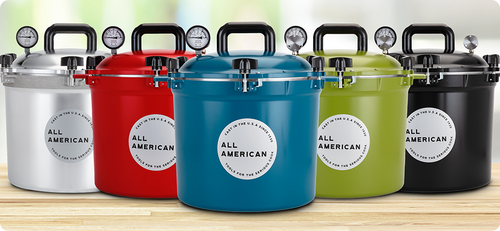
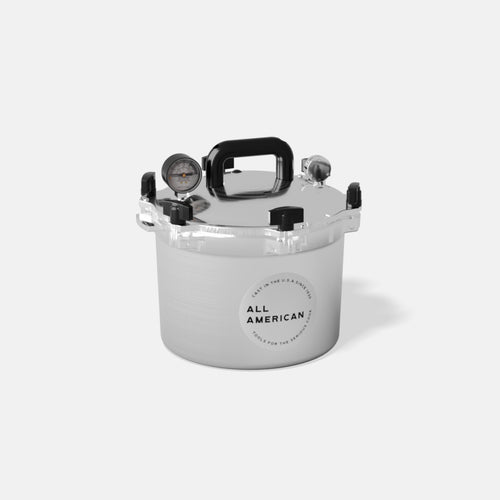
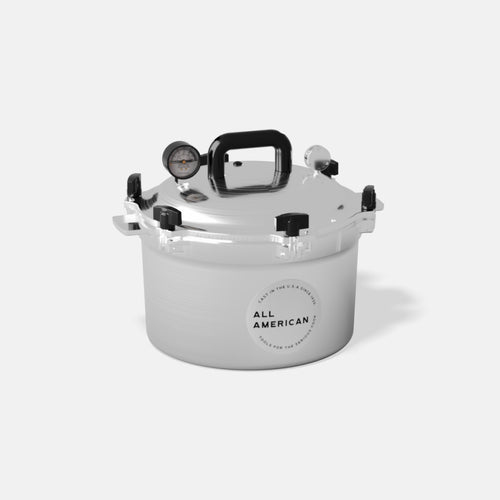
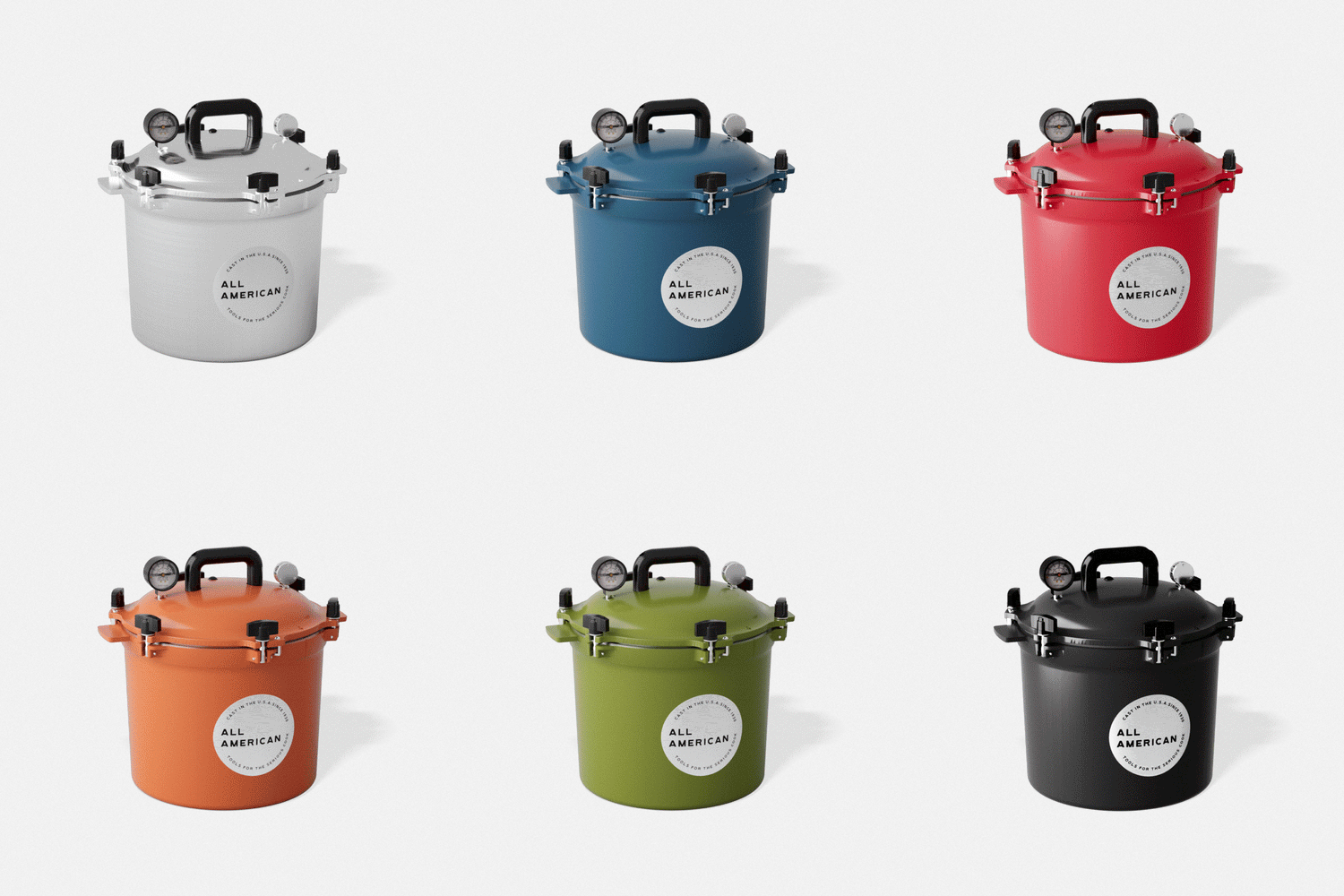
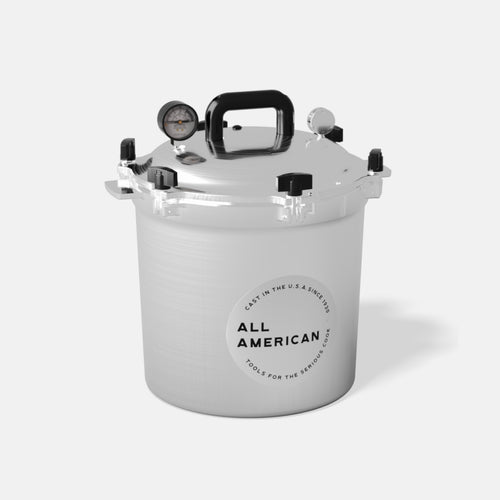
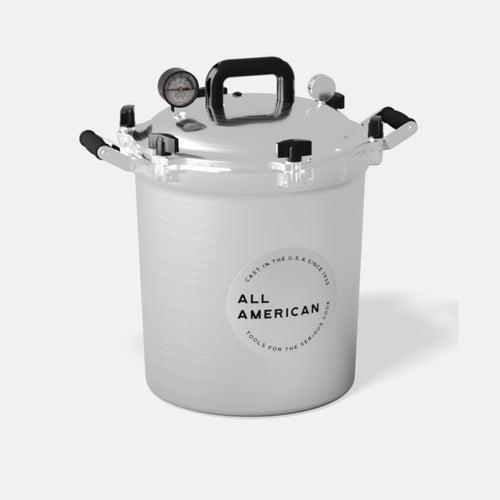
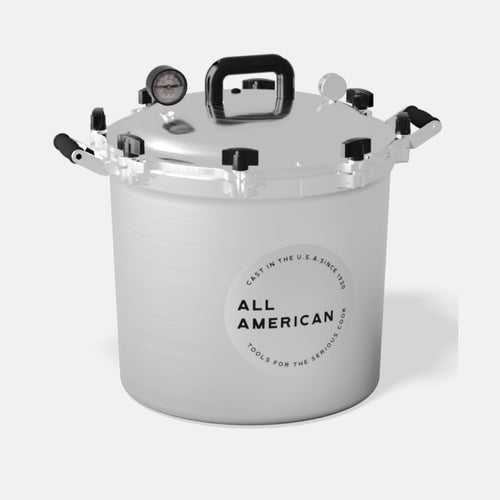
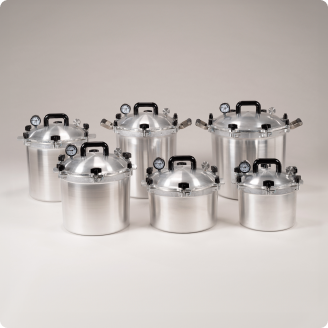
Our canners come in six sizes, from the compact Model 910 at 10.5 quarts, which is ideal for beginners or smaller batches, up to the 41.5-quart Model 941 for those processing in serious volume. Every model features our exclusive metal-to-metal sealing system. No gaskets to wear out, no rubber to crack or replace, just a precision-machined lid that seals reliably every time. That means you'll never have to spend money on replacement gaskets, saving both time and maintenance costs over the life of the canner. Built from heavy-duty cast aluminum, every canner is made in the USA and backed by a lifetime warranty. While the initial investment may be higher than some alternatives, it's a purchase designed to last for generations, making it one of the most cost-effective pressure canners you'll ever own.
Whether you're putting up your first batch of green beans or you've been canning for decades, we built these for you. Preservation also helped prepare perishable foods for transport over long distances, which is one reason these methods became so important.
Start with whatever your family eats most. Learn that one thing. Add from there. For example, a simple first step is to find better storage habits during meal preparation: refrigerate produce correctly, keep ethylene-producing items separate, or pick root crops for a cool, dark place around 4°C. The pantry grows, the grocery bill shrinks, and the skill compounds every single year. That's not a promise, it's just what happens when you get started.