 >
 >
 >
 >
 >
 >
 >
 >
 >
 >
 >
Invested in Canning Since 1930

How Home Canning Began
In the early 1800s, armies were marching on empty stomachs, and the French government offered a cash prize to anyone who could find a better way to preserve food to help feed the troops. A confectioner named Nicolas Appert answered the call. He discovered that food sealed in glass bottles and heated in boiling water stayed good far longer than food stored in other ways. He didn't know why it worked, but he proved that it did, and he claimed the prize around 1810.
That same year, an Englishman named Peter Durand patented the idea of preserving food in tin containers, and the age of the "tin can" began. In 1858, John Landis Mason patented the screw-threaded glass jar, and for the first time, ordinary families had a practical way to preserve their own food at home. Home canning took off.
The Science Catches Up
For decades, canning ran on trial, error, and tradition. Then, in the 1860s, Louis Pasteur's work showed that microscopic organisms were responsible for spoilage. Over the following decades, food scientists worked to understand which organisms were involved and what it took to stop them.
A key lesson came out of that research: not all foods are the same. High-acid foods like most fruits and pickles can be safely processed in a boiling water bath. Low-acid foods, like vegetables, meats, poultry, and seafood, can carry the spores of Clostridium botulinum, which boiling water cannot destroy. Eliminating those spores takes temperatures above 212°F, and the only way to reach them at home is with a pressure canner.
That's why pressure canning is the only safe, tested method for preserving low-acid foods. When you can green beans, corn, stock, or venison, the pressure canner is the tool that gets the job done safely.
National Center for Home Food Preservation
Canning Becomes a National Effort
By the early 1900s, home canning had become a pillar of American life. County extension programs, 4-H clubs, and home demonstration agents taught families how to preserve what they grew. During World War I, the government encouraged households to garden and can, so more of the commercial food supply could go to the troops. Canning wasn't just a way to save money. It was a way to feed a family and a country.
1930: We Enter the Story
This is where we come into the story. Our roots go back to 1909, when Abe Schwartz and Dave Balkansky established the Manitowoc Brass Foundry Company in Manitowoc, Wisconsin. In 1912, the company reorganized as the Wisconsin Aluminum Foundry Company, focused on aluminum casting and precision machining.
By September 1930, Schwartz had taken sole ownership of the foundry, and that year the company launched the All American pressure cooker/canner line under the name Automatic Canning Devices, Inc. Home canners had the science and the demand. What they needed was equipment that was safe, dependable, and built with care.
The timing mattered. The Great Depression was beginning, and families depended on their gardens and their pantries more than ever. Early All American canners arrived alongside flywheel and manual can seamers, which were sold under the "All American" and later "All American Automatic" names. Glass jars were costly and scarce, so preserving in metal cans was a real need, and we built the tools to make that possible.
1934–1935: Recognized on a National Stage
It didn't take long for the country to take notice. In 1934, our pressure canners and can sealers were demonstrated at the Chicago World's Fair. Visitors saw what the equipment could do, and the attention that followed was national.
By 1935, All American pressure cookers were recognized as among the best in the world, setting new standards for safety, durability, and precision. That reputation is the one we still work to live up to every day.
The 1940s: Supporting Families Through Hard Times
In 1940, the brand received a new visual identity that reflected its growing national presence. In 1941, we introduced the Hi-Speed Cooker Saucepan, a smaller pressure cooker that worked on any kind of stove.
Then, in 1943, as the nation faced wartime rationing, we introduced the V-43 Victory Garden Pressure Canner. Millions of families planted Victory Gardens, and they needed a safe way to preserve the harvest. The V-43 was designed to help them do exactly that.
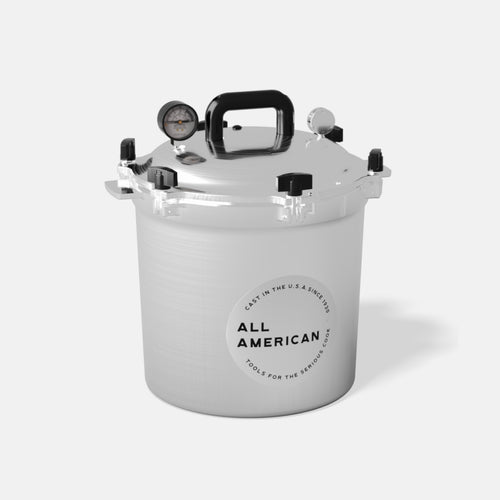
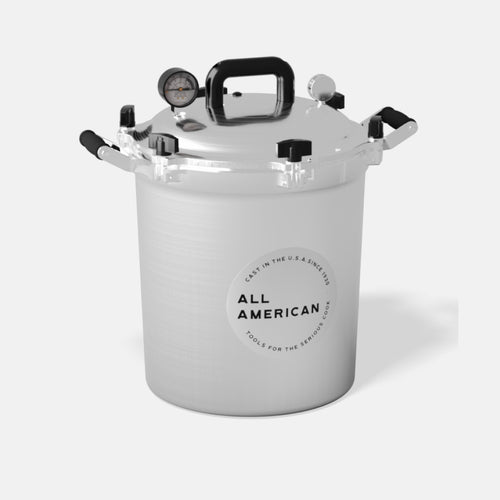
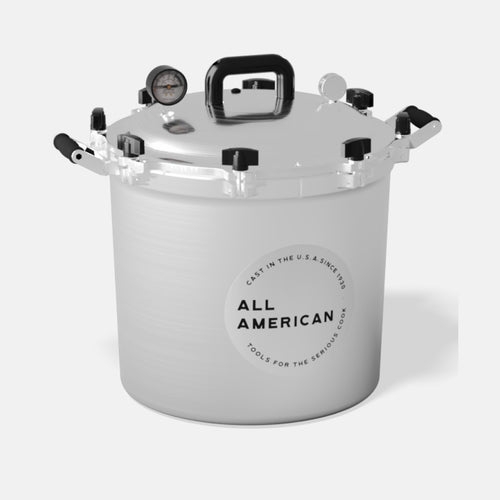
By 1947, we were promoting five canner models: the No. 7 (15½ qt), 907, 910½, 925, and 921½. The idea behind that range still guides us: canners aren't all alike, so their equipment shouldn't be either.
Decade After Decade, Canner After Canner
Through the decades that followed, we kept refining what we make without changing what matters:
- 1995: A unified new logo appeared across our canners, sterilizers, and can sealers.
- 1998: Our canners moved to a machined satin finish, bringing out the best in cast aluminum.
- 2009–2014: The canner line received an updated logo and a redesigned top handle, improved for strength and comfort.
- 2017: We launched allamerican1930.com so canners everywhere could find us, shop with us, and reach us directly.
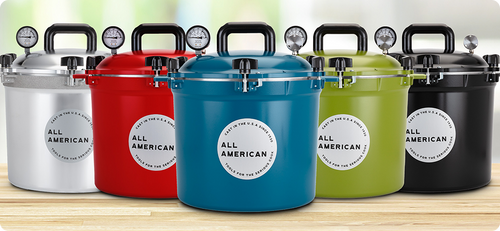
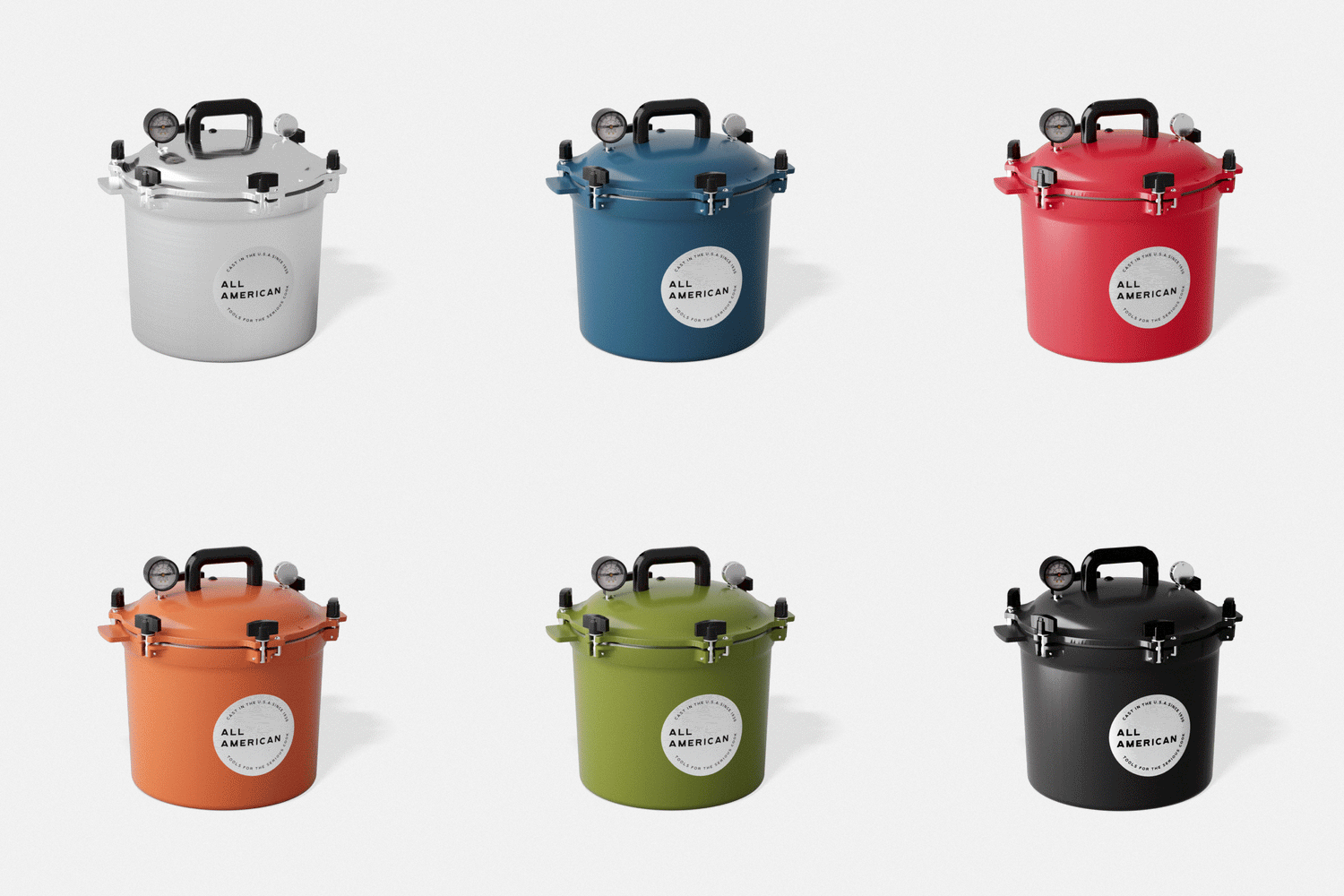
- 2022: We officially became All American 1930, a name that ties us to the year our canning story began, and introduced new color options.
- 2023: Every canner received a redesigned badge, honoring our heritage while looking ahead.
- 2025: We introduced the canning accessory kit, the canner repair kit, and the Canning Hub, an online resource center with how-to videos, recipes, and expert guidance.
- 2026: We refreshed our logo and colors once more. The cast aluminum at the heart of every canner stayed exactly the same.
Generations of canners have come through our doors, our phone lines, and our kitchens. Some bought their first canner from us. Some inherited one from a parent or grandparent. Some are still using a canner that's been in the family for decades, and they call us when they have questions. We love that, and it's the reason we do this.
Built to Last for Generations
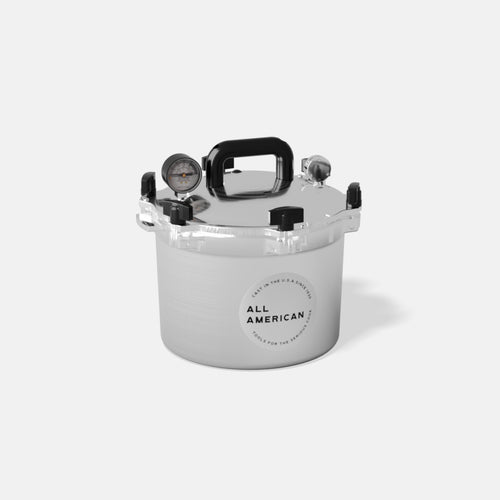
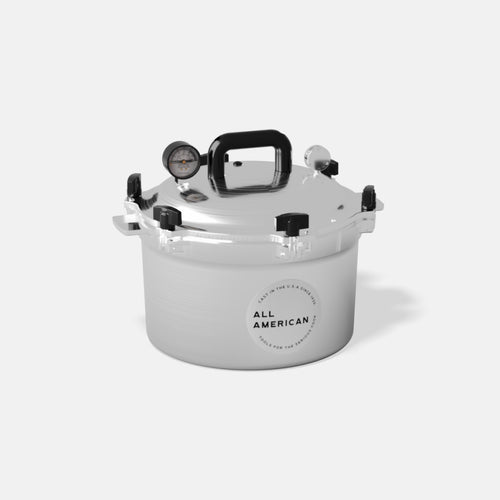
Every All American pressure canner is made from 100% post-consumer recycled aluminum and hand-assembled in Manitowoc, Wisconsin. Our metal-to-metal seal means there's no gasket to wear out or replace, and safety is built into the design. We make canners to be used season after season, then handed down, and we stand behind them with a lifetime warranty.
Real People, Ready to Help
Nearly 100 years in, one thing hasn't changed: we're here to help. If you have a question in the middle of a batch, need help with your canner, or aren't sure which model is right for your kitchen, you can reach a real person at our headquarters in Manitowoc. Our Canning Hub is there too, with videos, recipes, and guidance whenever you need it.
Here's to the Next 100 Years
Canning has come a long way from Appert's glass bottles. The science is better understood, the tools are safer, and the tradition is as strong as ever. Through all of it, we've been right here since 1930, making canners that last and helping people use them well.