 >
>
 >
>
 >
>
 >
>
 >
>
 >
>
 >
>
 >
>
 >
>
 >
>
 >
>
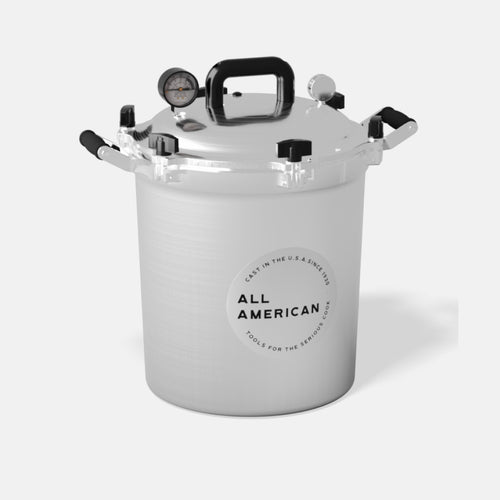
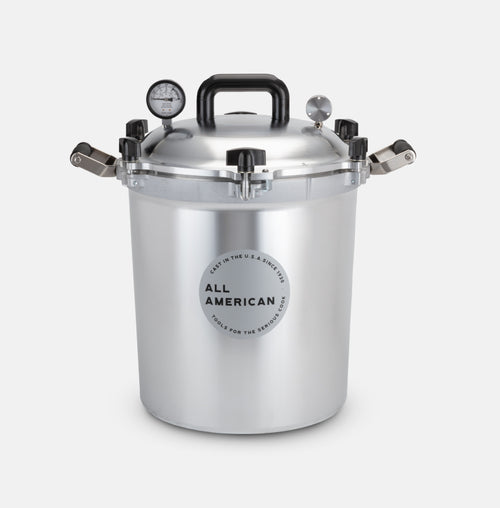


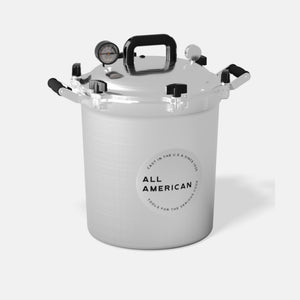
the 930 Pressure Cooker/Canner
Discover the Ultimate Canning Companion.
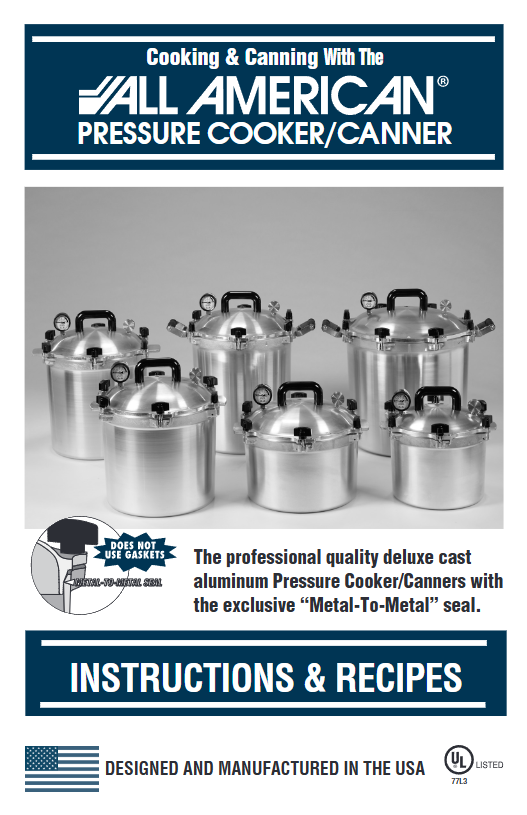
Manual de la envasadora a presión
Vea instrucciones y consejos para enlatar de manera segura.
View ManualCook & Can with All American 1930
Whether you're in the mood for culinary exploration or looking to preserve your favorite seasonal flavors, our cooker is your perfect kitchen companion.
Cook: Eat Today
Tender, fall-off-the-bone meats in less time.
Perfectly cooked grains and legumes.
Nutrient-rich steamed vegetables.
Flavorful soups and stews.
Can: Eat Later
Seasonal fruits and vegetables for year-round enjoyment.
Homemade jams, jellies, and preserves.
Hearty soups and broths for pantry storage.
Proteins like chicken, beef, and fish for convenience.
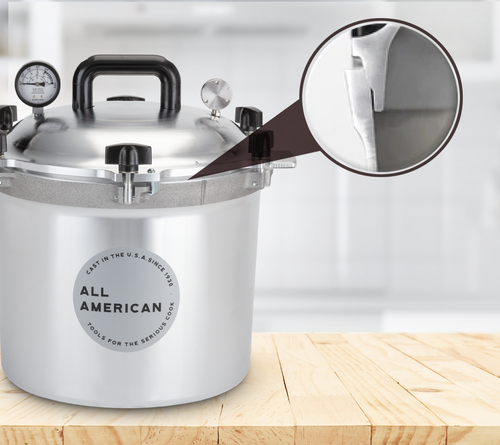
The All American 1930 Metal-to-Metal Seal
Benefits at a Glance
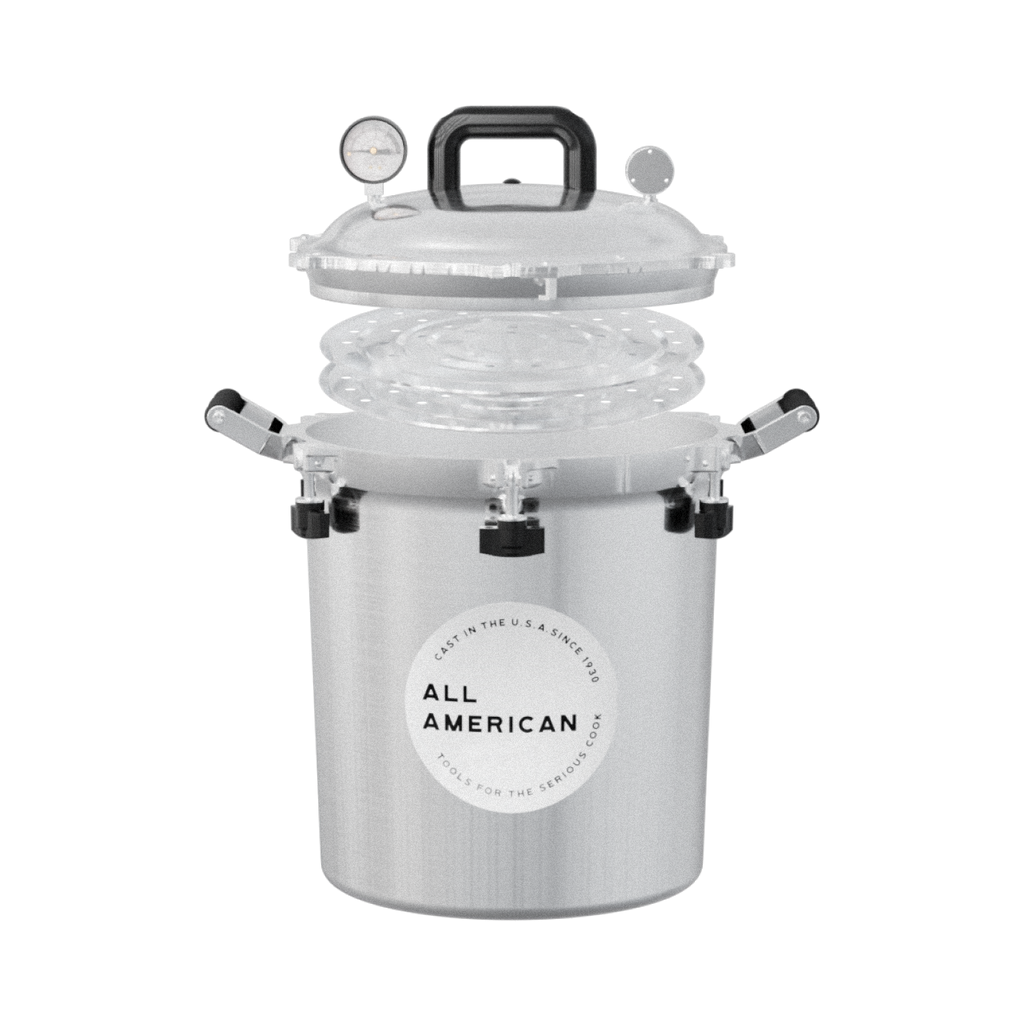
A Closer Look
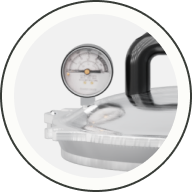
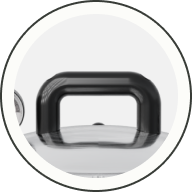

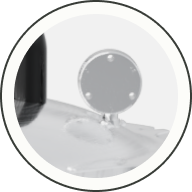



The Unrivaled Build
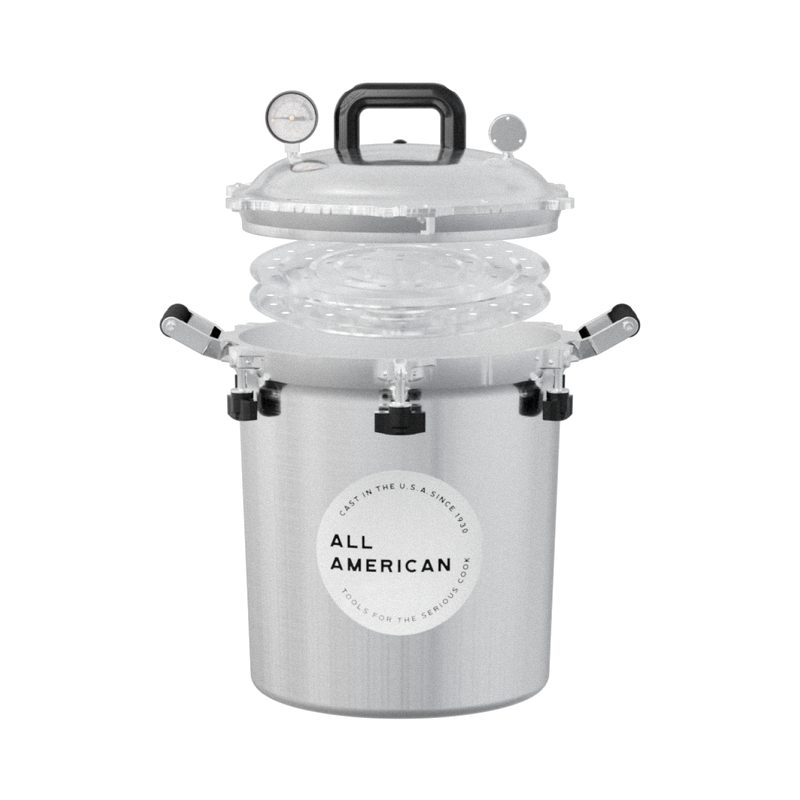
Sizes for all your needs
Size
Weight
Pint Jars*
Quart Jars*
Suitable For
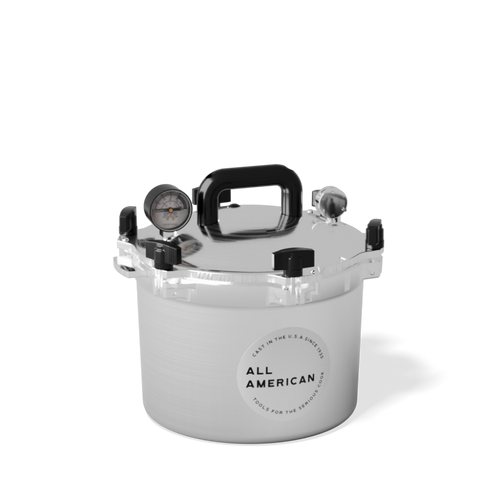
Olla a presión All American 910
10,5 cuartos de galón
11,5 libras
7
4
Estufas de gas, eléctricas o de superficie plana
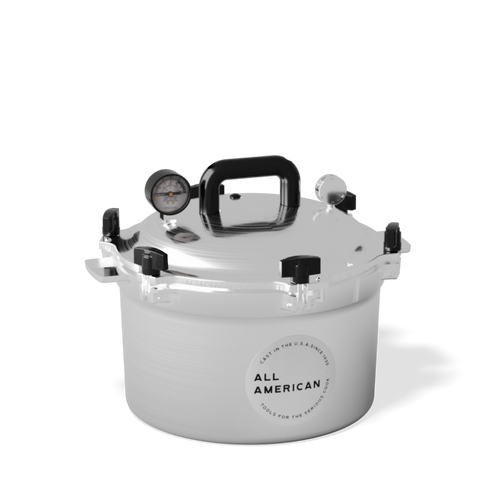
Olla a presión All American 915
15,5 cuartos de galón
15 libras
10
7
Estufas de gas, eléctricas o de superficie plana
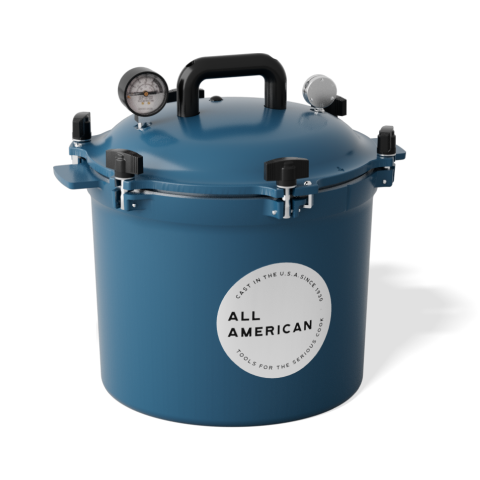
Olla a presión All American 921
21,5 cuartos de galón
17,75 libras
18
7
Estufas de gas, eléctricas o de superficie plana
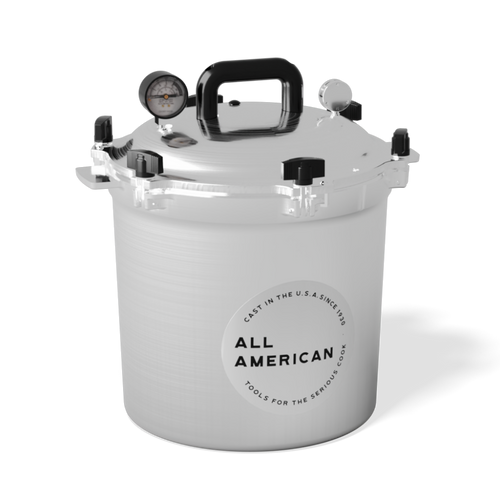
Olla a presión All American 925
25 cuartos de galón
18,25 libras
19
7
Estufas de gas, eléctricas o de superficie plana
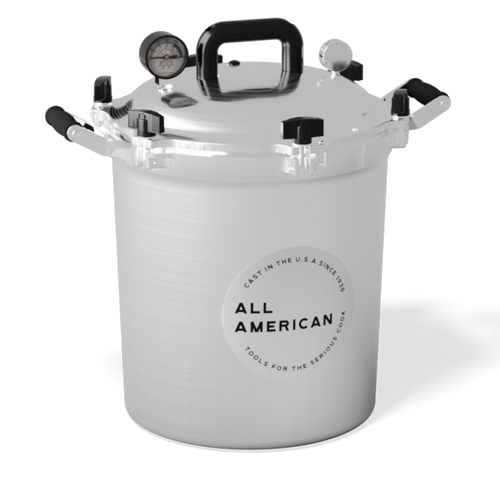
Olla a presión All American 930
30 cuartos de galón
21,25 libras
19
14
Gas, electricidad
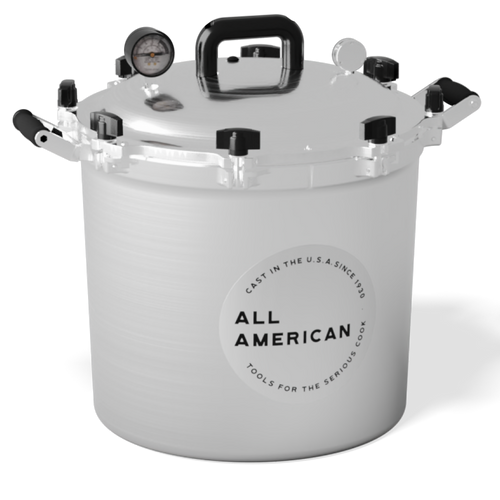
Olla a presión All American 941
41,5 cuartos de galón
33 libras
30
22
Gas, electricidad
FAQs
When water bath canning, you can use a pizza pan or cookie sheet as a cover. Do not use your pressure canner cover. Water bath canning requires steam to escape freely, so the canner should not be sealed with the pressure canner lid.
Start with our own resources for step by step guidance, tips, troubleshooting, and more.
All American 1930 Canning Hub: https://www.allamerican1930.com/pages/canning-hub
For additional safe, science-based guidance, we recommend these trusted sources:
National Center for Home Food Preservation
USDA Complete Guide to Home Canning
Cooperative Extension Services.
Local classes, guides, and regional advice.
Ball Home Canning
Always use modern, tested recipes and instructions from trusted sources to ensure safe food preservation.
Pressure Canning: Required for low-acid foods (pH above 4.6) such as vegetables, meats, poultry, seafood, beans, and soups. These foods must be processed under pressure to destroy Clostridium botulinum spores, which can survive boiling water temperatures.
Water Bath Canning: Safe only for high-acid foods (pH 4.6 or below), such as fruits, jams, jellies, pickles, salsa (tested recipes only), and tomatoes with added acid (lemon juice or citric acid).
Using the correct method is essential for food safety. Never attempt to water bath can low-acid foods.
Yes. If you are using reverse osmosis water in your canner, add 1 teaspoon of table salt to the water before placing your jars in the canner.
Most glass top stoves are considered safe to use with our models 910, 915, 921, and 925. Please check with your stove top manufacturer to be sure. The models 930 and 941 are too heavy and could cause damage to your glass top. DO NOT slide the pressure canner over a glass range surface as it could scratch and damage it.
It is best practice to give your pressure canner a quick check before each use. Inspect the metal-to-metal seal, make sure the vent pipe and regulator weight are clear, and inspect the overpressure plug to make sure it is free of wear and debris. We recommend a yearly replacement for the overpressure plug and the steam gauge. Never replace an overpressure plug with a used one. Inspect wing nuts, bayonet clamps and screws for any wear and replace as needed.
Watch this video for a pressure canner inspection checklist: https://www.youtube.com/watch?v=_EztWUVrv64
If you use a petcock, your steam gauge should be tested for accuracy.
If you use a vent pipe and pressure regulator weight, the gauge does not need to be tested. The gauge is accurate to ±2 PSI and is primarily used as a reference to monitor pressure and confirm when pressure has returned to zero.
You should apply a thin layer of olive oil to the metal-to-metal seal before each use.
Before replacing: Add a couple drops of penetrating oil at the steam gauge base where the threads enter the cover. Soak for about 10 minutes.
1. Using a 9/16” wrench, remove the gauge by turning it counterclockwise.
2. Apply a couple drops of olive oil to the threads of the new steam gauge. (Inspect the threads in the cover to make sure they’re clean and free of debris).
3. Turn gauge in clockwise by hand until finger tight.
4. Using a 9/16” wrench, turn the gauge an additional 1-1.5 turns until the gauge is facing the front of the cover. Do not overtighten.
Watch this video to see how to replace your steam gauge: https://www.youtube.com/watch?v=SiLhK6LckG0
For regular cleaning, wash the canner with warm, soapy water and dry it thoroughly.
To remove mineral buildup or discoloration, fill the canner with a 1:1 mixture of water and vinegar and bring it to a boil. A cream of tartar solution can also be used.
For stubborn buildup, an aluminum cleaner or steel wool pad may be used.
Discoloration inside your canner is typically caused by minerals in hard water, particularly calcium and magnesium.
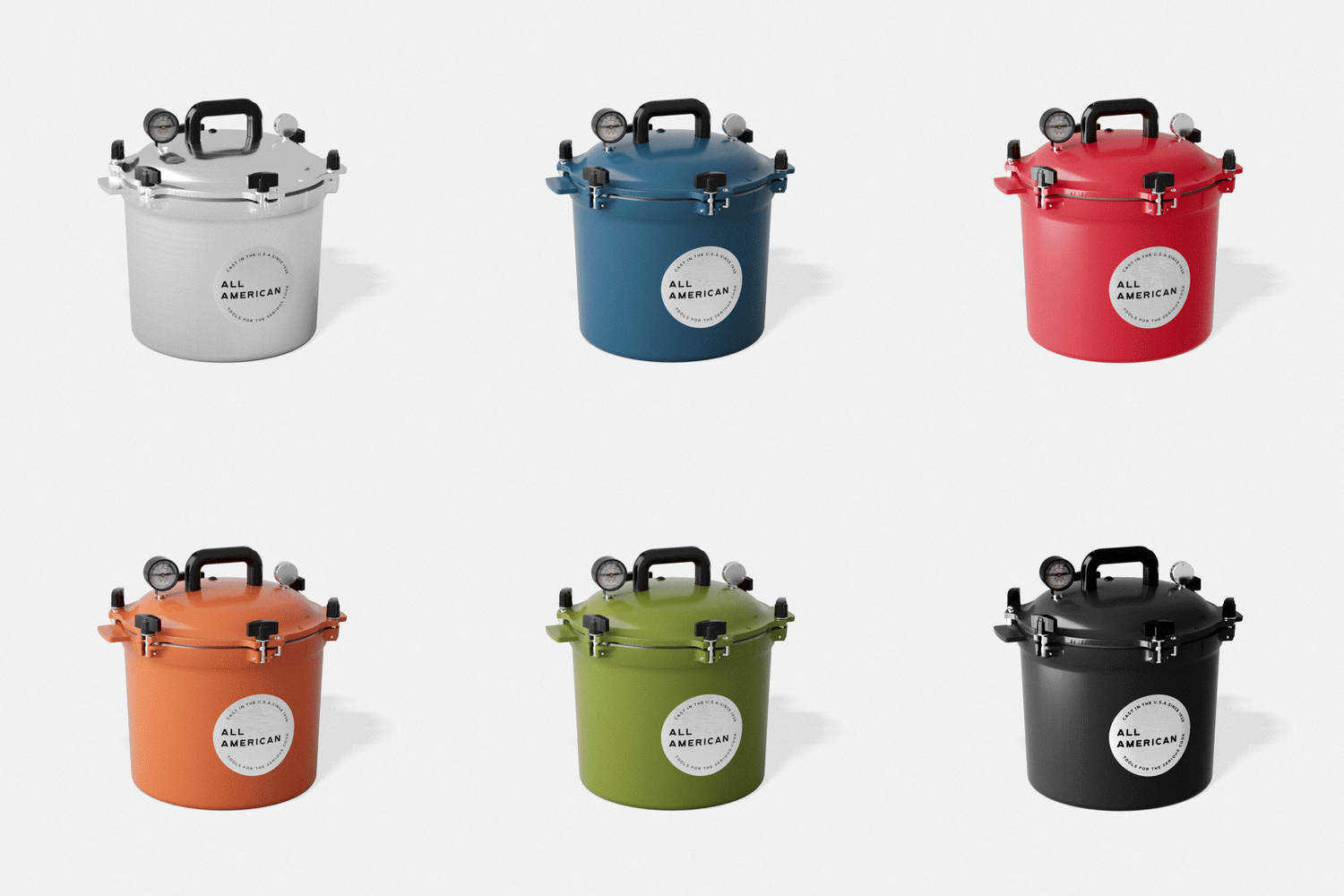
The red or burgundy.
No, All American 1930 pressure canners are NOT compatible with induction stovetops.
Any indoor electric or gas is suitable for all models. Models 910, 915, 921, and 925 are safe for use on flat top and glass-top stoves. Do not use induction cooktops.
If you choose to operate your canner with a propane tank, you do so at your own risk. Propane burners can cause canners to crack, and such damage is not covered under the warranty.
You may also use a commercial-grade hot plate rated at 120 volts and 1,500 watts. The heat source should provide between 12,000 and 24,000 BTUs. Never exceed 24,000 BTUs.
Yes. All American 1930 pressure canners are designed to safely can low-acid foods like meat, poultry, seafood, and vegetables, following USDA guidelines. However, note that the 10.5 Qt model should not be used for canning smoked fish due to specific considerations. For other low-acid foods, any size will be suitable, ensuring safe and effective preservation.
Both cookers/canners hold the same number of jars; the only advantage is when cooking, Model 925 holds 3-1/2 quarts more in liquid capacity. The 925 is also taller, which should be a consideration with the hood of your range.
Our pressure canners require 2–3 inches of water in the bottom before adding jars. This is enough to create the steam necessary for building pressure without submerging the jars.
For the Model 941, we recommend a burner or heating surface of approximately 10 inches in diameter. The base of this unit is nearly 15 inches wide, so a larger heat source helps ensure even heat distribution and proper stability.
For all other models, a burner in the range of 7½ to 8 inches is typically sufficient.
All American 1930 pressure canners are proudly manufactured in Manitowoc, WI USA.
All American 1930 pressure canners are made out of 100% post-consumer recycled aluminum sourced from U.S. companies.
This is caused by ejector pin during manufacturing. Stamped with numbers 1–4.
PFAS-free coating, FDA approved for incidental food contact.
Brass, plated.
A356, also known as A13560 under the UNS standard.
All American 1930 pressure canners are built with multiple built-in safety features that work together while you can.
Metal-to-metal seal (no gasket). Creates a secure seal without rubber parts that can crack, wear out, or fail over time.
Pressure regulator weight. Automatically controls and maintains the correct pressure inside the canner.
Overpressure Plug. Releases excess pressure if it ever builds beyond the safe limit.
Steam gauge. Gives you a reference and easy-to-read pressure measurement during use.
Heavy cast aluminum construction. Provides strength and stability under high pressure and heat.
Watch this video for a safety features overview
Allow your canner to cool down naturally, when the steam gauge reads zero your canner is safe to open. When opening make sure the lid is turned away from your face.
No, there are no safe and tested recipes for pressure canning food in half gallon jars.
No. Experts strongly advise against canning milk products. Contact Home Food Preservation for more info.
No lead paint is used.
Small amounts of water or steam leaking from the lid are normal, especially when your canner is new. This usually stops after a few uses as the lid settles in. As long as your pressure canner is maintaining the correct pressure and the lid is even all the way around, a little leakage is not a problem.
If the lid is leaking excessive amounts of steam or water:
-Make sure the lid is properly aligned and evenly tightened.
-Check the sealing surface for food particles or debris.
-Inspect the lid and canner rim for any dents, warping, or unevenness.
-Verify that the vent pipe and pressure regulator are clean and unobstructed.
Watch these videos to see when it is okay and when it is not okay.
When It's Okay: https://www.youtube.com/watch?v=zHoNCUl12BA
When It's NOT Okay: https://www.youtube.com/watch?v=w43JOjdsY3k
A vacuum can make the cover hard to remove. Gently pry the cover loose near the wing nut areas with a large standard screwdriver, working evenly around the cover. Do not push the screwdriver straight into the metal-tometal seal. Cover the screwdriver head with towel to prevent damage
First, check that the vent pipe is clear. Remove the vent pipe and inspect it for any debris or blockage. If the vent pipe is clear, increase the heat until a steady stream of steam is released.
It is normal for steam to be less visible coming from the vent pipe under certain conditions. The visibility of steam depends on the temperature and humidity of the surrounding air. In warmer or more humid environments, the steam may remain invisible as it dissipates quickly into the air.
Even if the steam is not highly visible, the unit may still be venting properly. Customers can often verify this by carefully observing heat output at the vent or listening for a steady flow of escaping steam.
As long as the unit is following the proper operating procedure and reaching the correct temperature/pressure, a lack of visible steam alone is not an indication of a problem.
If the lid is not sitting flat, the wing nuts may not be tightened evenly. Tighten the wing nuts in pairs, working across from each other to keep the lid level. Once the gap around the lid is even, tighten all of the wing nuts again, repeating this process twice to ensure the lid is properly secured.
1.) The metal-to-metal seal may be dirty. Clean the sealing surface thoroughly and apply a light coat of olive oil before use.
2.) The canner may have boiled dry. If the canner was allowed to boil dry, the metal may have warped and the lid may no longer seal properly.
If the heat is too low, the pressure may not build up enough to lift the weight. On the other hand, if the heat is too high, the weight can lift too forcefully, causing it to jam or vent improperly. To address this safely, gently tap the weight with butter knife or fork-be careful not to get burned.
Most likely your heat setting is too high. Lower your heat setting so the weight jiggles approximately one to four times per minute.
A thermal crack sound may occur if the lid is not seated or tightened properly. Before each use, make sure the metal-to-metal sealing surfaces are clean and lightly lubricated. Place the lid on the canner correctly and tighten the wing nuts evenly to ensure a proper seal.
Siphoning can occur when there are sudden temperature changes or when jars are packed too tightly or too full. Air bubbles, overpacking the food, or processing at a temperature that is too high can also cause liquid to escape from the jars.
- DDDennis D.Verified ReviewerReviewingThe 921 Pressure Cooker/CannerI recommend this productRated 5 out of 5 stars5 months agoMy best purchase ever.
I no longer remember how many years ago I bought my 921. Before I bought it I was worried about the price and whether I could afford it. But, as I have always done in those situations, I told myself that paying more for quality meant never having to replace cheaply made junk, and saving money in the long run. I have used it constantly over the years, and I am so thrilled that I paid for quality. Buy no other brand of pressure cookers.
- MMMike M.Verified ReviewerReviewingThe 921 Pressure Cooker/CannerI recommend this productRated 5 out of 5 stars5 months agoMade to last
I have owned mine since 2015 and it is still going strong. Very good quality.
- MImonalisa I.Verified ReviewerReviewingThe 921 Pressure Cooker/CannerI recommend this productRated 5 out of 5 stars5 months ago921 color kelp
My daughter purchased the 921 in kelp color for mother's day. We love this canner. She also purchased the canning book, Preserving with a purpose. We have canned the meals in a jar. This has helped us make our food last longer until the next food shopping trip. Best gift!!!
- SBSusan B.Verified BuyerReviewingThe 921 Pressure Cooker/CannerI recommend this productRated 5 out of 5 stars5 months agoBeautiful piece of countertop eye candy
I actually haven’t used it yet because it’s intimidating to me. I have tons of fresh garden produce I keep putting in freezer bags or giving away because I don’t know what to do or how to use it. I have all the glass jars and canning accessories but I feel paralyzed and don’t know where to start. I feel like I need someone in my kitchen with me to teach me how to use it.
All American 19305 months agoHi! We have a lot of helpful resources to get to you started with canning located in our Canning Hub!
- JJohnVerified BuyerReviewingThe 941 Pressure Cooker/CannerI recommend this productRated 5 out of 5 stars7 months agoLove IT
All American sets the bar for quality and craftsmanship. I love my 941 and hope my grandkids use it! Southeast Alaska requires top quality tools to preserve our food. All American products do not disappoint
You may also like


